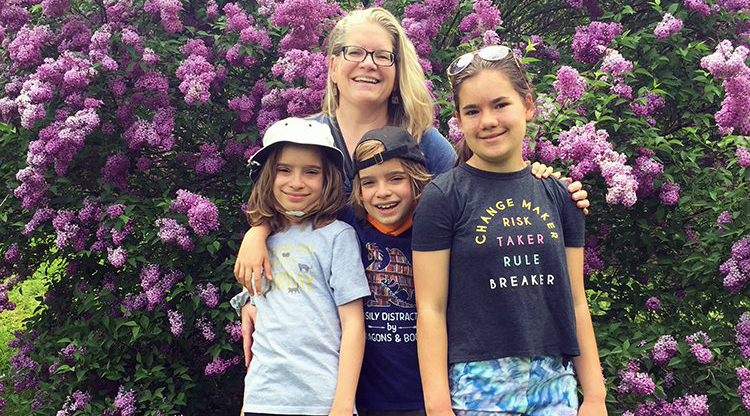
Is your child interested in acting? Or maybe they are shy and you’re looking for a way to boost their confidence. Today, I’m interviewing Beth Hampson, a Melrose mom of 3, about her family’s experience with The Young Company in Stoneham. The Young Company is Greater Boston Stage Company’s year-round theatre education program for students in grades 1-12, offering artistic training and performance opportunities in a professional setting.
Where are you from originally and what town do you live in now? I grew up in Connecticut right outside NYC. I Moved to the Boston area in 1997, for Graduate School and I have lived in Melrose since 2005.
How many children do you have and what are their age(s)? I have three children – a daughter who is 12 and in 6th grade and twin boys who are 10 and in 4th grade.
What do you love most about living in the North Shore area? I love the easy access to Boston, the many great arts and cultural opportunities on the North Shore and the green spaces such as the Fells, Ipswich Wildlife Sanctuary, Plum Island and Wingaersheek Beach.
How did your family first become involved in The Young Company? Our first experience with The Young Company was seeing a family friend perform in a Summer Festival production of the Little Mermaid when my daughter was in pre-k. The summer before 4th grade she was in the ACT 1 Summer Festival production of Freckleface Strawberry.
What productions have they been a part of over the years? Since then she has participated in both Winter and Summer Festivals and has been in the casts of Frozen Jr., the virtual production of The Phantom Tollbooth, and last summer her brothers joined her in A Wrinkle in Time, and again this winter in The Many Disguises of Robin Hood.
Who do you feel would be a good fit for the program? The Young Company is incredibly inclusive and honestly it would be a good fit for any child interested in being on stage! The education department does an excellent job of making their program accessible for all types of learners. It is also great for students who have a serious interest in theater. There are wonderful opportunities to learn and grow as an artist through the many program offerings.
What have your kids learned from being a part of theatre classes? They have gained confidence. They have met and made some of their best friends. They have learned how to collaborate and compromise. They have felt the joy of being a part of a cast and the strong relational bond that is created when actors come together to tell a story on stage. They are more accepting, kind, and inclusive of others because of their experience with The Young Company. And they have improved their memorization skills, developed language and literacy skills, improved their projection and articulation, learned about stage direction and theater etiquette, learned about dance, drumming, prop-making, and developed social and emotional skills.
For my daughter, who is quite serious about theater she has learned skills and techniques that have helped improve her acting, singing and dance. She has grown so much as an actor through The Young Company classes and productions.
Advice for parents considering having their students join The Young Company? Do it! If your child is interested in theater and developing their skills; If your child is shy and needs to build confidence; If your child needs to work on language and literacy skills; If your child needs to improve their social skills; If your child is super social, likes to ham it up and needs an outlet for their drama…they will love this program.
Find more about The Young Company’s Summer Festival 2022 running July 5 – August 21 on the web here and follow along with them on social media!
Cost Comparison: Proscar and Alternative Treatments
These may include a continued risk of sexual dysfunction, such as decreased libido, erectile dysfunction, or ejaculation disorders, which for some individuals can persist even after discontinuation of the medication. Instances of allergic reactions, such as hives, difficulty breathing, or swelling of the face, lips, tongue, or throat, demand urgent medical attention. One user expressed astonishment at the noticeable improvement in hair thickness and texture, leading to a significant boost in self-esteem. For individuals undergoing treatment with Proscar, managing side effects is crucial to maintaining quality of life and ensuring the medication's benefits outweigh its drawbacks. Community support and regular med checks with healthcare providers often transform initial skepticism into confidence. This transparency in discussing the safety profile of Proscar empowers users to make educated choices regarding their treatment plan and fosters a relationship of trust between patients and healthcare providers. By lowering DHT levels, Proscar effectively slows down hair loss and, in some cases, promotes regrowth of hair.
Potential Side Effects and Risks
Its journey from a prostate-specific medication to a beacon of hope for those battling hair loss exemplifies the unpredictability and innovation prevalent in medical research. While its benefits are significant, it is critical for patients and healthcare providers to carefully consider the potential side effects and weigh them against the therapeutic advantages. Another unfounded belief is that Proscar loses its effectiveness with prolonged use, but evidence suggests that the medication continues to provide benefits for many patients even after extended periods. Consequently, Proscar has garnered substantial backing from the medical community for its role in combating hair loss. The interaction between Proscar and herbal remedies can sometimes lead to unanticipated effects, including diminishing the effectiveness of Proscar or exacerbating side effects. When considering the risks associated with Proscar, particularly for women of childbearing age, it's crucial to explore safer alternatives. However, scientific studies have shown that it can be quite effective in reducing hair loss and promoting hair regrowth.
Safety First: Potential Side Effects and Considerations
Men taking Proscar should also be mindful when donating blood, as their blood could carry finasteride and affect pregnant blood recipients. Users may experience adverse reactions such as xerostomia and fatigue, although these are typically transient and mild. Clinical studies indicate that these psychological effects can surface within the first few weeks of treatment, making early recognition crucial. This condition affects a significant portion of the male population, leading to thinning hair and receding hairlines. This newfound confidence can have a cascading effect on other areas of life, boosting self-assurance in personal relationships, professional settings, and various social scenarios. These endeavors underscore a commitment to advancing medical knowledge and providing patients with cutting-edge treatment options. While Proscar offers a promising solution for hair restoration, understanding and managing its side effects is crucial for users.
Navigating Treatment: When to Consider Proscar for Hair Loss
Its success lies not just in halting the advance of hair loss but in laying the groundwork for regrowth, offering hope and tangible results to individuals affected by hair thinning. These can range from mild inconveniences to serious medical concerns, making it crucial for prospective users to weigh the benefits against the potential downsides. However, like all medications, it comes with its set of potential side effects. Using Proscar comes with its set of potential side effects which users should be aware of before starting treatment. The prevalence of these sexual side effects varies among individuals, with some experiencing minor to no impact, while others may face more severe challenges. Some individuals have found relief by using generics to reduce costs and maintain long-term treatment. The psychological toll associated with such changes in sexual health should not be underestimated, as it can significantly affect quality of life and mental health.
Stories of Hair Regrowth and Transformation
By regularly evaluating the patient's response, any necessary adjustments can be made to the Sig. These narratives, combined with professional endorsements, make a strong case for the drug's potential in reversing the daunting effects of hair thinning and loss. Additionally, users might experience hormonal changes over time, which can impact physical and emotional health. We will also examine the role of Proscar in hair loss treatment, understanding the mechanism behind its effectiveness and analyzing real success stories. Additionally, gene therapy is also being explored as a potential future treatment for hair loss. By reducing the production of dihydrotestosterone (DHT), a hormone that contributes to prostate growth, finasteride, the active ingredient in Proscar, helps in alleviating urinary symptoms associated with BPH. Precautionary measures cannot be overstated when dealing with medications like Proscar, known for its potential adverse effects on pregnancy and female hormone regulation.
💊 Understanding the Purpose of Proscar Use
While it offers significant benefits, including reducing the need for surgery related to BPH, it comes with its share of side effects that users need to be aware of. In addition to improving urinary flow, Proscar's action in reducing prostate volume has been shown to mitigate the risk of acute urinary retention. By inhibiting the enzyme 5-alpha-reductase responsible for this conversion, Proscar effectively reduces DHT levels in the scalp, which can stop the shrinkage of hair follicles and in many cases, reverse the process. However, it's crucial to approach this combination with caution. By prioritizing regular check-ups, patients can maintain peace of mind knowing that their health is being closely monitored throughout their Proscar regimen. The active ingredient, finasteride, works on a hormonal level, subtly altering the landscape where hair loss is prevalent. Being proactive in addressing side effects and following professional advice can significantly enhance the overall experience and outcomes with Proscar.
From Testosterone to Dht: the Transformation Process
The active ingredient, finasteride, interrupts the conversion of testosterone to dihydrotestosterone (DHT), a hormone linked to hair loss in men predisposed to androgenetic alopecia. Across various platforms and forums, individuals have openly shared their experiences with Proscar, detailing the impact it has had on their hair restoration journey. Understanding the specific targeted action of Proscar on the male hormonal system is crucial in appreciating why its use is restricted to men, despite the unfolding research into hormonal imbalances and conditions outside the traditional scope of BPH treatment. To further navigate the waters of side effects, users can employ several strategies. Another user highlighted the gradual yet steady progress of regrowth, emphasizing the patience and persistence required in the journey towards a fuller head of hair. Patience and persistence are key, as finding the right balance can take time, and adjustments may be required based on the evolving nature of your response to the combined treatment strategy. Closely monitoring the progress of the Proscar-based treatment plan is crucial for ensuring its optimal effectiveness within the holistic approach.
Navigating Usage: Tips for Optimizing Proscar's Benefits
DHT plays a significant role in various bodily functions, including hair growth. They will also monitor your progress closely and make any necessary adjustments to your dosage as needed. This action preserves the hair follicles' vitality, promoting healthier and thicker hair growth. In the battle against hair loss, Proscar operates by targeting the fundamental hormonal process responsible for follicle miniaturization. By reducing DHT levels in the scalp, Proscar helps to slow down hair loss and, in some cases, even promote hair regrowth. With restored hair, individuals may feel more attractive, which can positively affect their interactions with others. Proscar, primarily used to treat symptoms of benign prostatic hyperplasia (BPH), contains finasteride, which has been found to promote hair regrowth in some men experiencing male pattern baldness.
Monitoring Effects of Proscar Dosage
However, its uses extend beyond merely encouraging hair regrowth. Final Thoughts on Dispelling Proscar Myths and Truths:. When individuals notice their hair growing back and filling in thinning areas, it can lead to a boost in self-confidence. This exploration offers individuals grappling with hair loss a scientific basis for considering Proscar as a viable treatment option. Proper dosing ensures that you receive the therapeutic benefits of Proscar while minimizing the risk of potential side effects. Numerous studies confirm Proscar's effectiveness in treating hair loss, particularly male pattern baldness. Users often remark on how the drug has boosted their confidence, allowing them to feel more at ease during social interactions and professional endeavors.
Future Outlook and Ongoing Research
It is not merely a physical issue but one that directly impacts a person's identity and how they perceive themselves. While individual results vary, the compilation of success stories forms a compelling argument for considering Proscar as a viable solution for those struggling with hair loss. Monitoring the effects of the chosen dosage is also important to ensure that the treatment is effective and well-tolerated. Understanding the impact of Proscar requires a deep dive into the mechanics of how it functions within the body. The impact of Proscar on hair growth is not immediate but unfolds over months of consistent use. People experiencing hair loss may find themselves avoiding social situations or constantly worrying about their appearance, which can ultimately hinder their overall quality of life. While not everyone will experience these mental health changes, it's critical for users and healthcare professionals to remain vigilant and address any such symptoms early on.